Primary, Secondary & Tertiary Rajakaluve: Understanding Buffer Zones
- Mar 12
- 5 min read

In Bangalore, the term Rajakaluve often surfaces during property purchases, legal disputes, and even demolition drives. A Rajakaluve is essentially a natural stormwater drain system that carries rainwater across the city, connecting lakes and preventing flooding. Though it may look like a simple drain, it plays a crucial role in urban planning and environmental balance.
With rapid urbanisation in Bangalore, many properties have been constructed over or too close to these drains. This has led to increasing property disputes, loan rejections, and in severe cases, demolitions due to buffer zone violations. Understanding the classification and buffer rules of Rajakaluve is now essential for every property buyer and developer.
What is Rajakaluve?
The word Rajakaluve comes from Kannada, where “Raja” means king and “Kaluve” means canal or drain. It refers to Bangalore’s traditional stormwater drainage network designed to channel excess rainwater into interconnected lakes. Historically, the city was built around a cascading lake system, where surplus water from one lake flowed into another through Rajakaluves.
This system was a brilliant example of ecological planning, ensuring water conservation and flood management long before modern infrastructure existed. However, as urban growth accelerated, many of these natural drains were encroached upon or narrowed.
Rajakaluves are essential for flood prevention, especially during heavy monsoons. When blocked or built over, water has nowhere to flow, leading to urban flooding in several parts of the city. Today, these drains are managed by civic authorities such as the Bruhat Bengaluru Mahanagara Palike (BBMP) and monitored under planning regulations framed by agencies like the Bangalore Development Authority (BDA).
Classification of Primary, Secondary & Tertiary Rajakaluve
Primary Rajakaluve
Primary Rajakaluves are the main stormwater drains in Bangalore’s drainage hierarchy. They carry large volumes of water and connect major lakes across the city. These drains are critical to the overall flood management system.
They typically:
Serve as the main stormwater channel
Connect major lakes and water bodies
Have high water-carrying capacity
Run through key low-lying areas
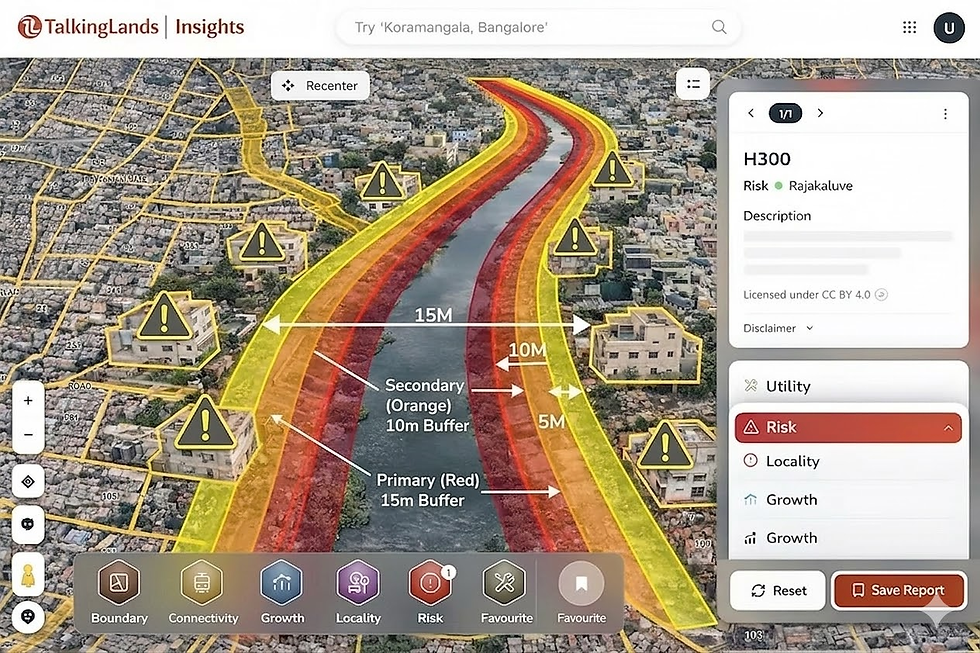
Buffer Rule: As per prevailing government and court-approved norms, the buffer zone for a primary Rajakaluve is 15 meters from the edge of the drain on either side. Construction within this zone is prohibited to ensure free water flow and environmental protection.
Secondary Rajakaluve
Secondary Rajakaluves feed into the primary drains. They collect water from multiple layouts, smaller roads, and localities before directing it into the main stormwater channels.
These drains handle moderate water flow and are equally important in preventing local flooding.
Buffer Rule: The approved buffer zone for a secondary Rajakaluve is 10 meters from the edge on either side. Any construction within this area is considered a violation under planning regulations.
Tertiary Rajakaluve
Tertiary Rajakaluves are smaller internal drains found within layouts and residential areas. They collect rainwater from streets and smaller plots and channel it toward secondary drains.
Although they carry smaller volumes of water, they are essential in maintaining the flow network.
Buffer Rule: The buffer zone for a tertiary Rajakaluve is 5 meters from the edge on either side, and construction is restricted within this limit.
Rajakaluve Buffer Zone Rules in Bangalore
Buffer zones are no-construction zones around stormwater drains. These rules were reinforced after court interventions, including directions from the National Green Tribunal (NGT), aimed at preventing environmental damage and urban flooding.
Current buffer distance guidelines:
Primary Rajakaluve: 15 meters on both sides
Secondary Rajakaluve: 10 meters on both sides
Tertiary Rajakaluve: 5 meters on both sides
These regulations are implemented by civic authorities like BBMP and planning bodies such as BDA.
The purpose of these buffer zones includes:
Flood mitigation
Prevention of encroachments
Protection of natural water flow
Environmental conservation
Reduction of property damage during heavy rainfall
Non-compliance can result in notices, penalties, or demolition orders.
Why Buffer Zones Matter for Property Buyers
For property buyers in Bangalore, Rajakaluve buffer zones can significantly impact investment decisions. Many buyers unknowingly purchase properties within restricted zones, only to face legal or financial complications later.
Key risks include:
Demolition risk: Authorities may remove illegal portions.
Loan rejection: Banks often deny loans if properties fall inside buffer zones.
Legal disputes: Ownership challenges and litigation may arise.
Resale difficulties: Future buyers may hesitate.
Reduced property value: Market price drops due to legal uncertainty.
Due diligence is no longer optional. Before purchasing land or apartments, verifying Rajakaluve status is crucial.
How to Check Rajakaluve on Your Property
If you are planning to buy or already own property, follow these steps:
Check the BDA Master Plan – Review the land-use zoning map for drainage markings.
Use the BBMP GIS Map – The online GIS portal shows stormwater drains and buffer lines.
Verify through Survey Number – Cross-check the property’s survey number against official maps.
Consult a Licensed Surveyor – A professional survey provides accurate ground measurements.
Obtain an Official Report – Secure written confirmation from relevant authorities before investing.
Never rely solely on verbal assurances from sellers or brokers.
Common Myths About Rajakaluve
If the building is old, it’s safe.
Small drains don’t matter legally.
If the local body approved it, it must be legal.
Buffer rules apply only to new constructions.
In reality, violations can be challenged regardless of building age, especially if they obstruct natural water flow.
Recent Demolitions & Legal Actions
In recent years, civic authorities in Bangalore have intensified action against Rajakaluve encroachments. The Bruhat Bengaluru Mahanagara Palike has conducted demolition drives in several flood-prone areas, especially after heavy monsoons exposed blocked drains. Notices have been issued to both residential and commercial property owners found within buffer zones.
These actions highlight the seriousness of compliance. Even large developments are not exempt if they violate buffer norms.
Conclusion
Rajakaluves are not just drains; they are the backbone of Bangalore’s historic water management system. Understanding the classification of primary, secondary, and tertiary drains, along with their buffer zones, is critical for property safety and legal compliance.
Before investing in any property, conduct thorough legal due diligence and verify Rajakaluve status through official records. A simple check today can prevent costly legal trouble tomorrow.
Always check Rajakaluve buffer compliance before buying property in Bangalore.
FAQs
1. What is a primary Rajakaluve?
A primary Rajakaluve is the main stormwater drain connecting major lakes and carrying high volumes of rainwater.
2. What is the buffer zone for primary Rajakaluve in Bangalore?
The buffer zone is 50 meters from the edge on both sides.
3. Can construction be done inside Rajakaluve buffer zone?
No. Construction within the buffer zone is prohibited under planning regulations.
4. How do I check if my property is in a Rajakaluve area?
You can check BDA master plans, BBMP GIS maps, or consult a licensed surveyor.
5. Who regulates Rajakaluve in Bangalore?
Civic bodies like BBMP and planning authorities such as BDA regulate Rajakaluves.
6. What happens if a building is inside buffer zone?
Authorities may issue notices, impose penalties, or order demolition of illegal portions.
7. Is Rajakaluve shown in EC (Encumbrance Certificate)?
No. Rajakaluve details are usually not reflected in the EC; they must be verified through planning maps.
8. Can banks approve loans for properties near Rajakaluve?
Banks may reject loans if the property falls within the buffer zone due to legal risk.